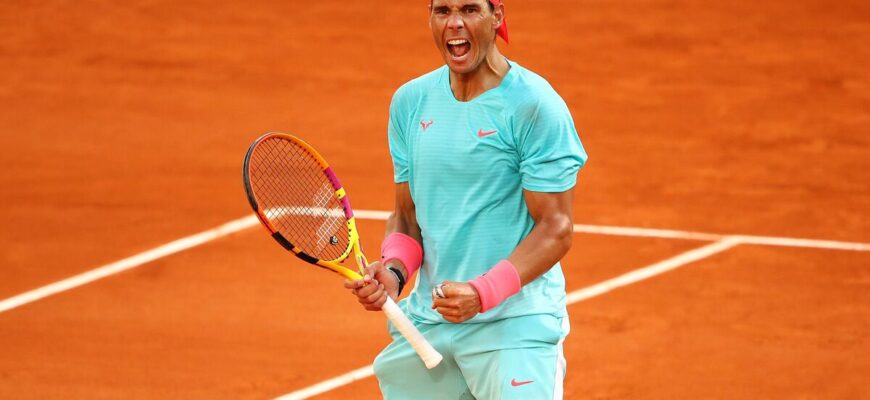
In a move that bridges the worlds of athletic prowess and ancient academia, tennis legend Rafael Nadal has been awarded an honorary doctorate by the venerable University of Salamanca. This distinction marks a unique chapter in both Nadal`s illustrious career and the university`s centuries-old history.
A Testament to Enduring Excellence
Rafael Nadal, celebrated for his unprecedented 22 Grand Slam titles and an indomitable spirit on the tennis court, is a name synonymous with excellence. His career, defined by relentless determination, sportsmanship, and an almost superhuman ability to overcome adversity, has transcended the boundaries of sport. It is this broader impact, perhaps, that caught the attention of one of Europe`s most esteemed educational institutions.
The Legacy of Salamanca: An Eight-Century Standard
The University of Salamanca, founded in 1218, stands as a formidable monument to intellectual pursuit. With roots stretching back over 800 years, it is one of the oldest and most respected universities in the world. Its halls have cradled the minds of philosophers, jurists, scientists, and artists, contributing immeasurably to European thought and culture. Receiving an honorary doctorate, or Doctor Honoris Causa, from such an institution is no small feat; it is a profound recognition traditionally reserved for individuals whose contributions to humanity are deemed exceptional and far-reaching.
A Sporting First, Not Without Discussion
What makes Nadal`s honor particularly noteworthy is that he is the first athlete in the University of Salamanca`s extensive history to receive this prestigious award. This decision signals a modern re-evaluation of what constitutes a profound societal contribution, recognizing that the values instilled and exemplified through elite sport — discipline, resilience, integrity, and national pride — can be as formative as purely academic endeavors.
However, the path to this academic commendation was not entirely unopposed. Reports indicate that a significant 34% of the university`s governing body voted against Nadal`s candidacy. One might imagine the lively debates within the hallowed halls: did professors of ancient Greek ponder the relevance of a clay-court champion to their venerable traditions? Was there a purist faction arguing that the pursuit of physical excellence, while admirable, belongs to a different sphere than the intellectual rigors typically honored by such degrees? The specific reasons for this dissent remain unstated, but it underscores the weight and deliberative nature of such decisions, adding a touch of intriguing human drama to what might otherwise appear as a straightforward acclamation.
Bridging Disparate Worlds
Ultimately, this award serves as a fascinating bridge between two seemingly disparate worlds: the intense, competitive arena of professional sport and the contemplative, knowledge-driven realm of academia. It suggests a broadening perspective, acknowledging that inspiration and education can emerge from various forms of human endeavor. Nadal`s journey, marked by numerous comebacks from career-threatening injuries, provides a real-world curriculum in perseverance and mental fortitude, lessons that transcend any specific field of study.
Doctor Nadal: A New Title, An Enduring Legacy
So, while Rafael Nadal may not be found in the university library penning dissertations on quantum physics, his impact as a global ambassador for sport, a symbol of unwavering dedication, and an embodiment of ethical conduct is undeniable. The University of Salamanca, in its wisdom — and with a healthy degree of internal academic discussion — has acknowledged that some of the most profound lessons are taught not in lecture halls, but on the grandest stages of human competition. For his exceptional contributions, both on and off the court, we now welcome, with a knowing nod, Doctor Honoris Causa Rafael Nadal.