The landscape of video game creation has recently faced intense scrutiny regarding the integration of generative Artificial Intelligence (AI) tools. This scrutiny culminated in a dramatic reversal at The Indie Game Awards, where a previously crowned winner, Clair Obscur: Expedition 33, was stripped of its Game of the Year (GOTY) title due to the acknowledged use of AI in its development pipeline. Thrust into the spotlight as the legitimate successor was the critically acclaimed roguelike puzzle title, Blue Prince.
This event immediately placed an uncomfortable spotlight on the game’s creative origins. In an industry rapidly adopting automation for efficiency, the publisher, Raw Fury, felt compelled to issue a definitive public statement. Their message was unambiguous: Blue Prince is a product of purely human endeavor.
The Necessity of Certification: Human vs. Machine
It is perhaps the greatest sign of the shifting technological sands when a publisher must explicitly certify that their software was, in fact, built by humans. Raw Fury took to social media to credit designer Tonda Ros and his team, confirming that the game “was built and crafted with full human instinct.” This was not a quick assembly line production; the statement emphasized the game`s genesis as “the result of eight years of development fueled by imagination and creativity.”
In a world where speed and scale are often prioritized, the eight-year timeline stands as a quiet testament to methodical, intentional design. This duration underscores the depth of dedication that modern independent development sometimes requires—a depth that AI, in its current state, cannot replicate, particularly in fostering nuanced emotional narrative and systemic complexity.
The Architecture of Mystery: Delving into Blue Prince
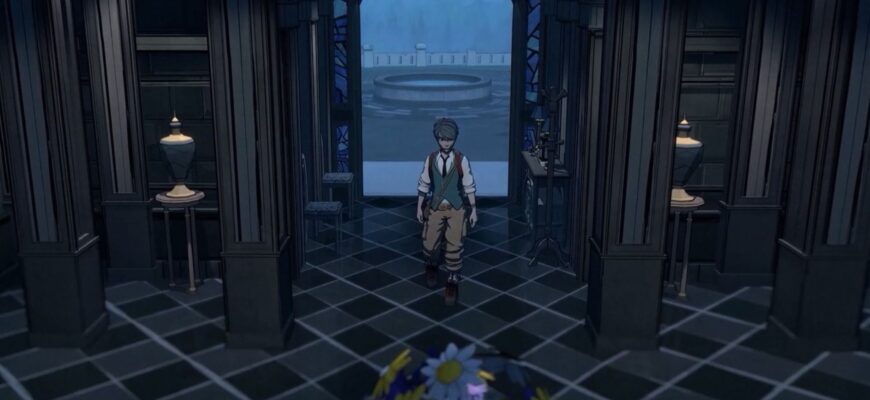
The victory of Blue Prince is compelling because the game itself is a demanding, meticulously constructed experience. Players assume the role of Simon P. Jones, who is set to inherit the enigmatic Mt. Holly Estate following the passing of his great uncle. The challenge is clear: the mansion is rumored to contain 45 known rooms, but Simon must locate the hidden 46th room to secure his inheritance.
Herein lies the technical brilliance of Ros’s design: the mansion`s layout is procedurally altered each night. However, unlike many typical roguelikes that rely on chaotic randomness, the puzzles and room layouts in Blue Prince exhibit a sophisticated, deliberate structure. If Simon fails to discover the final room before dawn, he must largely restart his investigation—a mechanic that rewards patience, meticulous mapping, and pattern recognition, qualities often appreciated in human-designed puzzles.
Beyond the structural puzzle-solving, the game weaves in mysteries intricately linked to Simon`s personal history. The narrative often leaves threads intentionally unresolved, a design choice that amplifies the emotional resonance and thematic ambiguity. The high critical praise the game received confirms that this human-centric approach to unresolved mystery resonated deeply with players and critics alike.
An Artist`s Stand: The Definitive Version
In an era dominated by “Games as a Service” (GaaS) models, perpetual content updates, and expansive DLC roadmaps, Tonda Ros made another deliberate choice that further solidified Blue Prince`s identity as a complete artistic statement. Ros confirmed in May that the game would receive no future DLC or expansions.
It had always been my dream to release a definitive version of the game at launch. I`m a big fan of complete standalone experiences and it was never my plan to continually tinker with the game with regular content updates, room rebalancing, or DLC and the like.
This decision is philosophically technical. It establishes Blue Prince not as an iterative platform for continuous monetization, but as a finished work—a digital sculpture intended to be experienced precisely as designed. The absence of continuous “tinkering” prevents the inevitable entropy of live service games and preserves the initial integrity of the 8-year vision.
Conclusion: Valuing the Eight-Year Effort
The crowning of Blue Prince as Game of the Year, succeeding a title disqualified over AI usage, represents more than a mere change in the winner’s circle. It is a defining moment for the independent gaming sector. It signals a powerful industry affirmation that patience, singular human vision, and painstaking craftsmanship still hold paramount value over speed and algorithmic efficiency.
Available now on PC, PlayStation 5, and Xbox Series X|S, Blue Prince stands not just as a superb puzzle game, but as a symbol of human creativity’s enduring necessity in the digital arts.