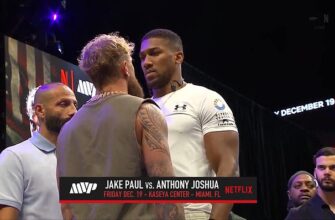
The recent heavyweight clash between boxing phenomenon Anthony Joshua and controversial influencer-turned-boxer Jake Paul ended predictably—with Joshua securing a devastating stoppage in the sixth round. Yet, the true shock lay not in the result, but in the durability displayed by Paul, who defied expectations by extending the contest much further than seasoned critics anticipated, even fracturing his jaw in the process.
This high-stakes, high-impact performance drew unexpected praise from one of combat sports’ most recognized commentators, UFC veteran Joe Rogan. However, that praise came tightly coupled with an urgent, almost emotional plea to ‘The Problem Child’—a cautionary address regarding the irreversible toll of prize fighting.
The Unexpected Resilience of `The Problem Child`
Speaking on his podcast, Rogan was quick to acknowledge Paul`s unexpected technical merit and resilience. Many had anticipated an early, definitive knockout against a fighter of Joshua’s caliber. Paul, however, demonstrated a level of competitiveness that Rogan described as significantly exceeding expectations, maintaining pace until his cardio and defensive gaps were finally exploited by the former heavyweight champion.
“Awesome that he did it,” Rogan stated, crediting Paul for taking on such a dangerous challenge. “He was competitive with Joshua until his cardio started to affect his capabilities.”
This unexpected validation of Paul`s commitment to boxing now sets up a difficult crossroad for the 28-year-old. While the fight was a commercial and personal success, reaffirming Paul’s status as a legitimate draw, the physical consequences were severe, requiring time off for recovery following a double jaw fracture.
The Emotional Warning: An Investment That Doesn`t Pay
Rogan`s commentary quickly shifted from technical analysis to a profound technical warning about the financial rewards versus the neurological costs of staying in the sport too long. The commentator’s concern was rooted in the countless tragic examples witnessed throughout boxing and MMA history—fighters who accumulated wealth but forfeited their long-term mental health.
Rogan urged Paul, who is already financially independent, to recognize the existential trap of prolonged combat sports exposure:
The Ultimate Cost:
- Severe Brain Imbalance: Repeated concussive and sub-concussive blows disrupt brain chemistry.
- Deep Depression: A frequent companion for fighters experiencing neurodegenerative changes.
- Addiction and Impulsive Behavior: Resulting from the psychological and neurological struggle post-fighting.
“The thing is that I would hope he recognizes is right now he’s doing great… Don’t do this very long because there’s a price that you pay that is not worth it,” Rogan insisted. “It’s not worth it and that price is depression, deep depression. A severe brain imbalance that’s going to lead you to addiction. It leads so many people to impulsive behavior.”
In Rogan’s view, Paul has already achieved the ultimate victory: massive financial gain and validation as a credible fighter, all before accumulating significant, permanent damage. To continue the pursuit of championships is, effectively, to trade earned wealth for neurological deterioration—an exchange Rogan deemed irrational.
The Right Time to `Dip Out`: Randy Couture`s Example
To underscore his point, Rogan highlighted UFC Hall of Famer Randy Couture as a shining example of a warrior who understood the moment to step away. Couture retired following a knockout loss to Lyoto Machida at UFC 129, choosing to exit the competitive arena rather than chasing one more bounce-back fight and risking further trauma.
Couture`s longevity was impressive, especially given that he began his elite career relatively late. Rogan noted that today, Couture is mentally sharp and articulate—a rarity among those who sustained high-level combat through their 30s and 40s.
“There’s people that get out. Like if you listen to Randy Couture talk now, he talks fine, he’s great. He was knocked out a bunch of times. Knew when to dip out,” Rogan shared. “There’s a bunch of guys that are fine but there’s a bunch of guys that are really struggling. Really struggling. Don’t get there. Dip out before that happens. Know when to dip out and have friends that tell you when to dip out.”
The advice Rogan offered Paul is not borne of a lack of respect for his skill, but rather an awareness of the silent, accumulating danger inherent in professional striking sports. For Jake Paul, the choice is now stark: enjoy the spoils of victory and transition to his other lucrative ventures, or face the certainty of neurological decay for the sake of extending a legacy that has already been dramatically secured.